
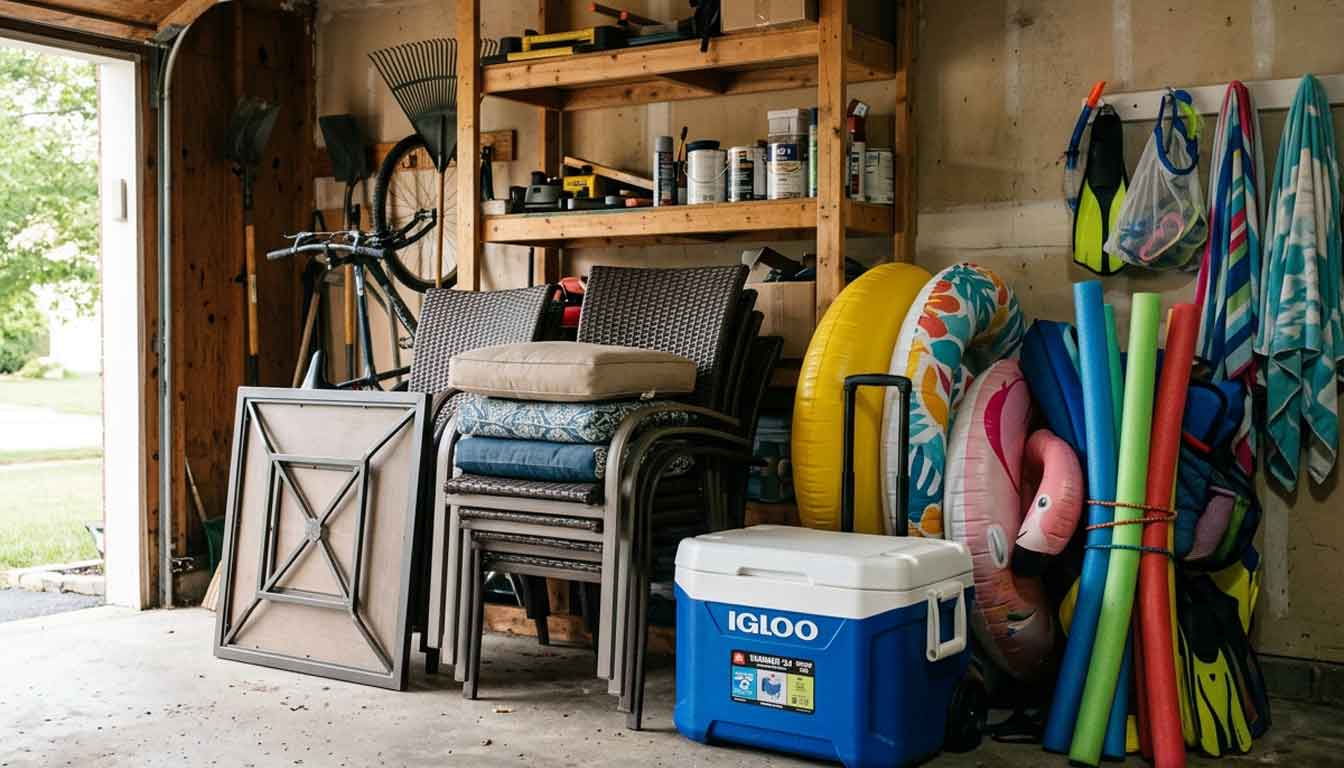
Every Georgia summer ends the same way. The pool floats are deflated in a corner of the garage, the camping gear never quite made it back to the shelf, and there are three coolers stacked where a car is supposed to park. Then football season starts, the holidays arrive, and the whole pile sits there until May. Packing summer gear away deliberately — instead of letting it drift into a corner — takes one weekend and gives you back a usable garage for the entire fall and winter.
Why Late August Is the Right Window
Timing matters more in Georgia than in most states. The instinct is to wait until it genuinely feels like fall, which around here can mean November. That is a mistake, because the single most important step in storing summer gear is making sure it goes in dry.
Late August through mid-September gives you warm, mostly dry afternoons to hose down patio furniture, scrub a cooler, and lay a tent out on the driveway until every seam is bone dry. Try that in late October, after the fall rains have started, and you end up packing away gear that is faintly damp. Sealed in a box for eight months, faintly damp becomes mildew. The same principle drives our advice on storing winter clothing and equipment in the spring — you pack away a season while the weather still cooperates, not after it turns.
There is a practical argument too. Labor Day weekend is the last honest use most pool and lake gear sees. Pack it the following weekend and nothing gets stored before you are finished with it.
The End-of-Summer Pack-Away List
Work through the house and yard in this order. Most families find the list longer than they expected.
Pool and water gear
Floats, rafts, noodles, life jackets, goggles, and the pool vacuum. Rinse the chlorine off everything — it degrades vinyl over months of contact — then dry thoroughly and deflate what deflates. Pool chemicals are the exception: chlorine tablets, shock, and algaecide are classified as hazardous and cannot go in a storage unit. Keep those in a ventilated shed at home.
Patio furniture, grills, and umbrellas
A patio set is usually the bulkiest thing on the list, and the item most likely to stay outside by default. Georgia winters will not freeze it, but months of rain and pollen do real damage to cushions, wicker, and untreated wood. Wash the frames, wash and fully dry the cushions, and collapse the umbrella. Grills can be stored once they are cleaned — but the propane tank stays home. Fuel and propane are not permitted in any storage unit, at any facility.
Camping and outdoor recreation gear
Tents, sleeping bags, camp chairs, coolers, kayaks, paddleboards, and life vests. Tents and sleeping bags are the classic mildew casualties, so set them up or unroll them in the sun for a day before packing. Store sleeping bags loosely rather than compressed — long-term compression permanently flattens the insulation.
Fans, window units, and dehumidifiers
Box fans, pedestal fans, and window air conditioners take up an absurd amount of closet space for something used four months a year. Drain window units completely and let them sit upright for a day before boxing.
Summer sports equipment
Baseball and softball gear, golf clubs if you are not a year-round player, lawn games, and bikes that only come out in warm weather. Wipe leather gloves and cleats down before storing.
The warm-weather wardrobe
Shorts, swimsuits, sandals, and lightweight bedding. Wash everything first — body oils and sunscreen residue attract insects and set into permanent stains over a long storage season.
Very polite and helpful. Would recommend to others.
— Paula Cleghorn, Ark Self Storage reviews
Prep Work That Prevents Damage
Four habits account for most of the difference between gear that comes out of storage ready to use and gear that comes out ruined.
- Clean and dry, without exception. Every item, every time. This is the rule that matters most in a humid climate.
- Deflate, disassemble, and nest. Rafts, tents, and patio umbrellas take a fraction of the space collapsed. Nest coolers inside each other and fill the interiors with smaller items.
- Skip sealed plastic for soft goods. Airtight bins trap whatever moisture is already in a cushion or sleeping bag. Breathable bins or fabric covers let fabric equalize instead.
- Label for your future self. In April you will be looking for one specific thing. Label the ends of boxes that face the aisle, not the tops.
Good containers pay for themselves here. Uniform, sturdy boxes stack cleanly to the ceiling and do not collapse under eight months of weight — our packing supplies cover the basics, and the packing tips guide goes deeper on loading a unit properly.
What Georgia Humidity Does to Stored Gear
A standard drive-up unit is perfectly fine for a lot of this list: metal patio frames, plastic toys, coolers, lawn games, hard-sided equipment. Those items do not care what the humidity is.
Other things do. Foam padding, life jackets, tent fabric, leather gloves and cleats, and anything with a motor or circuit board all respond badly to months of swinging temperature and moisture. Georgia stays humid deep into October, and an uninsulated unit tracks the outside air closely. If your list leans toward soft goods, electronics, and padded equipment, a climate-controlled unit is the safer call — our breakdown of climate-controlled vs. standard storage covers exactly where the line falls. Climate-controlled units are available at several of our facilities, including Marietta and Macon.
How Much Space You Actually Need
Most households overestimate. A 5×10 comfortably holds a family’s pool gear, camping equipment, coolers, fans, and a few boxes of summer clothing. Add a full patio set — table, four chairs, umbrella — and you are into 10×10 territory. A 5×5 works if you are only clearing out the soft goods and small equipment.
Boats, jet skis, campers, and trailers are a separate question. Those belong in outdoor vehicle and RV storage rather than an enclosed unit. If you want a number before you commit, our storage calculator sizes it in about a minute.
One more thing worth checking before you sign anywhere: how a facility handles rent over time. Storing seasonal gear means an eight-month rental, and plenty of operators quote a low opening rate and then raise it every few months. Ark Self Storage does not — the team’s standing promise is that we won’t raise your rent every month like the other guys. For a seasonal rental, that predictability is the whole point.
Ms. Hope is a wonderful woman, she had a cheerful and welcoming attitude from the time we walked in until the time we left. We need more people in the world like her. Every question we asked, she had a helpful response. Thank you guys so much!
— Kennedy Smith, Ark Self Storage reviews
Frequently Asked Questions
When should I put summer gear into storage in Georgia?
Late August through mid-September is the sweet spot. Pools and lakes see their last real use over Labor Day weekend, but the weather stays warm and dry enough that you can wash, dry, and pack gear outdoors without fighting the cold. Waiting until November means storing items that are damp from fall rain, which is how mildew starts.
Does summer gear need climate-controlled storage?
Some of it does. Life jackets, tents, sleeping bags, and anything with foam padding, leather, or electronics benefit from climate control, because Georgia humidity lingers well into October. Metal patio frames, coolers, and plastic toys are fine in a standard drive-up unit.
What size storage unit holds a household of summer gear?
A 5×10 holds a typical family’s pool gear, camping equipment, coolers, and a couple of fans. Add a patio set with a table, four chairs, and an umbrella and you are closer to a 10×10. Use the storage calculator if you want a firmer number.
How do I keep stored patio cushions from getting moldy?
Wash them, then let them dry completely in the sun for a full day before packing. Store cushions in breathable fabric bins or loosely covered rather than sealed plastic, which traps residual moisture. Stored dry in a climate-controlled unit, cushions come out in spring exactly as they went in.
Can I store a grill or anything with fuel in a storage unit?
You can store the grill itself, but not the propane tank. Fuel, propane cylinders, gasoline, and other flammables are not permitted in any storage unit. Disconnect the tank and keep it outdoors at home, then clean the grates and store the grill covered.
Make Room Before the Season Turns
The point of an end-of-summer pack-away is not really the gear — it is the space. A garage you can park in, a closet with room for coats, a spare room that stops being a staging area. Eight months of that is worth one Saturday of hosing off patio chairs.
Ark Self Storage has eight facilities across Georgia, from Marietta and Norcross down to Savannah, Macon, Moultrie, Douglas, and Fitzgerald. Browse our locations, skim the storage tips library, or get in touch and we’ll help you size a unit before the weather turns.